- All
- Product Name
- Product Keyword
- Product Model
- Product Summary
- Product Description
- Multi Field Search
 English English
 Views: 0 Author: Site Editor Publish Time: 2026-06-16 Origin: Site


Stainless steel soap dispensers are a top choice for modern restrooms because they resist rust and corrosion, withstand heavy daily use, and match almost any interior style. Compared to plastic or glass models, they last longer, look more premium, and stay hygienic with minimal maintenance—making them ideal for hotels, offices, and high-traffic spaces.
Choosing the right soap dispenser sounds simple, but it shapes how a restroom feels and functions. The wrong unit cracks, leaks, or looks dated within a year. The right one quietly does its job for a decade while elevating the entire space.
That's why so many designers, facility managers, and hotel buyers gravitate toward stainless steel soap dispensers. They strike a rare balance between durability, hygiene, and clean visual appeal. In this guide, you'll learn what sets stainless steel apart, how it compares to other materials, and which dispenser types suit different spaces—including proven models from soap dispenser manufacturer XINDA.
A soap dispenser gets touched, splashed, and refilled constantly. Few materials handle that abuse as gracefully as stainless steel.
Here's why it stands out:
Rust and corrosion resistance: Stainless steel resists the moisture and humidity that destroy lesser materials. A rust-proof body keeps the unit looking fresh for years, even in steamy bathrooms and shower areas.
Built for heavy use: Commercial restrooms see hundreds of pushes a day. Stainless steel construction shrugs off the wear that cracks plastic and shatters glass.
Hygienic by design: Smooth metal surfaces wipe clean in seconds and don't harbor grime. Wall-mounted units remove shared bar soap entirely, cutting the risk of cross-contamination.
Timeless aesthetics: A sleek chrome or brushed finish blends with nearly any décor, from minimalist hotel suites to industrial-chic cafés.
Lower long-term cost: A higher upfront price pays off. Fewer replacements and refillable cartridges mean less waste and a better return over time.
Each material has a place. The right pick depends on where the dispenser goes and how hard it works.
Feature | Stainless Steel | ABS Plastic | Glass |
|---|---|---|---|
Durability | Excellent—resists dents and wear | Good—affordable but can crack | Fair—can shatter if dropped |
Rust resistance | Rust-proof and corrosion-resistant | Won't rust, but may discolor | Won't rust |
Best setting | High-traffic, commercial, hotels | Budget projects, offices, schools | Luxury vanities, low-traffic homes |
Appearance | Sleek, premium, modern | Clean and functional | Elegant, decorative |
Maintenance | Wipes clean easily | Easy to clean | Needs careful handling |
Safety with kids/pets | Very safe | Very safe | Less safe—risk of breakage |
Choose stainless steel if durability and a premium look matter most—think hotels, restaurants, and busy office washrooms. Choose ABS plastic if budget is the priority and the space sees moderate use, such as schools or staff bathrooms. Choose glass if you want a decorative touch for a low-traffic luxury vanity and don't mind the fragility.
Beyond material, the dispensing mechanism matters. The two main categories are manual and automatic.
A manual soap dispenser relies on a simple push-button pump. Each press releases a pre-measured dose, so there's no waste and no batteries to replace. These units need little maintenance, making them a dependable, economical choice for almost any restroom. Many models are wall-mounted and lockable, which deters theft and tampering in public spaces.
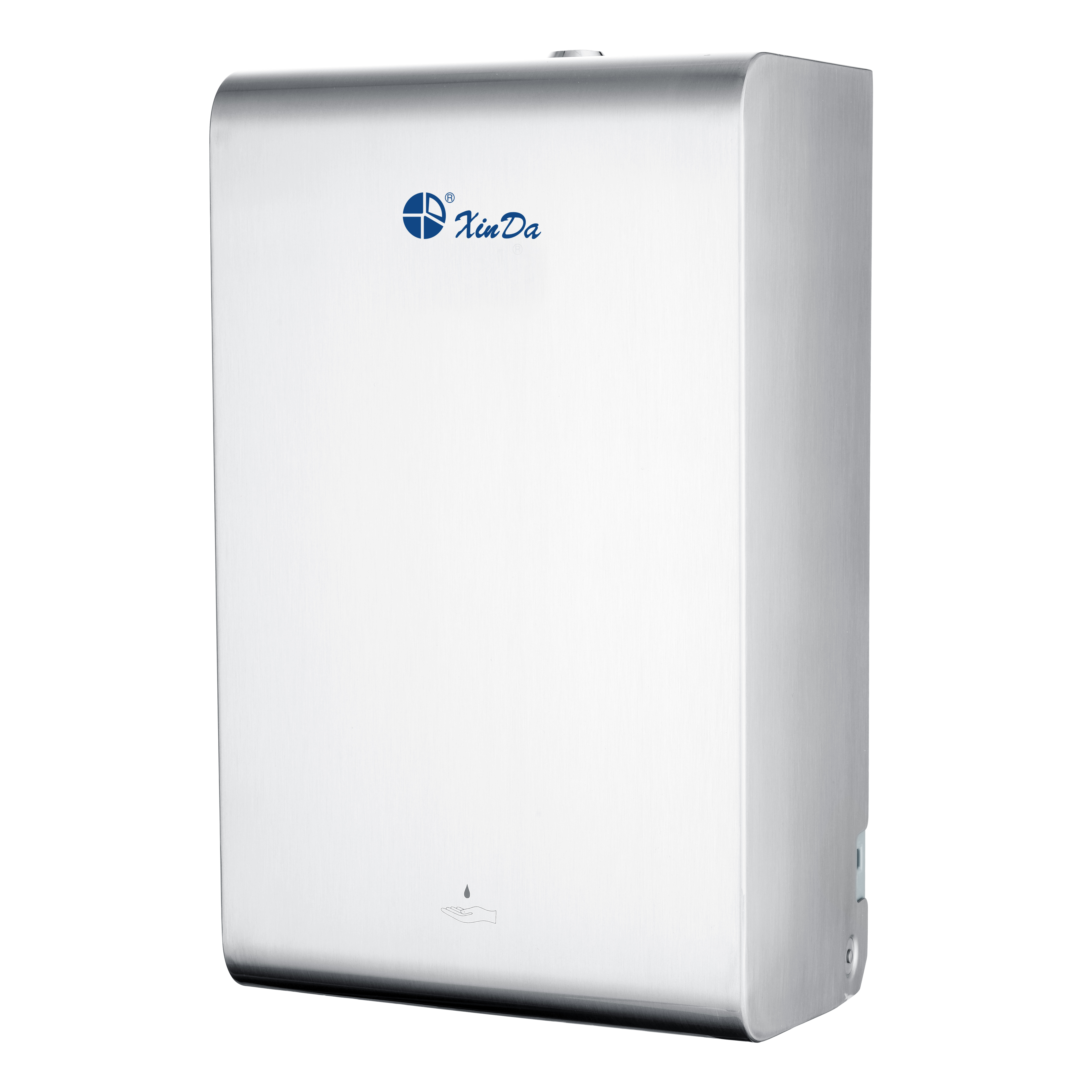
An automatic soap dispenser—also called an auto soap dispenser—uses a sensor to detect hands and release liquid soap or foam without contact. Touch-free operation appeals to anyone focused on hygiene, since users never touch a shared surface. Auto soap dispensers suit high-end hotels, healthcare settings, and offices where a hands-free experience is a selling point.
A double soap dispenser holds two products at once—say, liquid soap and hand sanitizer—in a single fixture. This saves wall space and gives users easy access to both. Double units shine in hospitals, food-processing areas, and busy commercial restrooms where hygiene is a high priority.
XINDA, a China soap dispenser manufacturer with more than 25 years in the hotel appliance industry, produces a range of reliable wall-mounted soap dispensers. Three models stand out for modern restroom projects.
The ZYQ138S is a double manual soap dispenser built from durable ABS plastic, available in white and silver powder coating. Each side holds 380mL, and the push-button pump dispenses a precise 1mL dose every time. It's wall-mounted, lockable, and theft-deterred—ideal for hotels and public washrooms that need two soaps in one tidy fixture.
The ZYQ40S pairs a novel, decoration-friendly design with practical function. This double soap dispenser features white ABS construction and a generous 400mL capacity per side. Like its sibling, it's wall-mounted, lockable, and offers pre-measured 1mL doses. It's a smart fit for bathrooms and kitchens that want efficiency without sacrificing style.
The ZYQ39 is a single hand soap dispenser with a 390mL capacity and a chemical-resistant transparent PC cartridge, so you can monitor soap levels at a glance. Available in white and silver, it offers both drip and foam options. The wall-mounted, lockable design makes it a versatile liquid soap dispenser for offices, restaurants, and shared living spaces.
A few practical questions narrow the field fast:
How much traffic? High-traffic commercial restrooms favor durable stainless steel or robust ABS units with lockable bodies.
One soap or two? If you need soap plus sanitizer, a double soap dispenser saves space and effort.
Manual or touch-free? Pick a manual soap dispenser for low maintenance and no batteries, or an automatic soap dispenser for hands-free hygiene.
What capacity? Larger reservoirs mean fewer refills—important for busy spaces.
What's the budget? Plastic models keep costs low; stainless steel rewards you with longevity and a premium feel.
Match those answers to your setting, and the right dispenser becomes obvious.
A soap dispenser is a small fixture with an outsized impact on hygiene, style, and running costs. Stainless steel models lead for high-traffic, design-forward spaces, while quality ABS units like the XINDA ZYQ138S, ZYQ40S, and ZYQ39 deliver dependable performance and clean looks at a friendly price.
Ready to refresh your restroom? Explore XINDA's full range of wall-mounted soap dispensers, request samples, or reach out to the team for guidance on the best fit for your project.
Are stainless steel soap dispensers worth the extra cost?
Yes, for most commercial and high-traffic settings. They resist rust and corrosion, last far longer than plastic or glass, and need little upkeep. The higher upfront price is offset by fewer replacements over the dispenser's lifetime.
Are manual or automatic soap dispensers better?
It depends on your priorities. Manual soap dispensers cost less, need no batteries, and require minimal maintenance. Automatic soap dispensers offer touch-free hygiene, which is valuable in healthcare, hospitality, and other settings where reducing contact matters.
What is a double soap dispenser used for?
A double soap dispenser holds two products—such as liquid soap and hand sanitizer—in one fixture. It saves wall space and is popular in hospitals, food-processing areas, and busy commercial restrooms where hygiene is critical.
Can wall-mounted soap dispensers prevent theft?
Many can. Models like the XINDA ZYQ138S, ZYQ40S, and ZYQ39 are lockable and theft-deterred, making them well suited to public restrooms and other high-traffic areas.
Where can I buy soap dispensers in bulk?
XINDA, a China-based soap dispenser manufacturer with over 25 years of experience, supplies wall-mounted, manual, automatic, and double soap dispensers worldwide. They accept custom colors and logos and can accommodate smaller initial orders to help new buyers test the market.