
- All
- Product Name
- Product Keyword
- Product Model
- Product Summary
- Product Description
- Multi Field Search
 English English
 Views: 0 Author: Site Editor Publish Time: 2026-09-08 Origin: Site


Stainless steel soap dispensers—especially wall mounted and auto soap dispenser models—are the top choice for modern restrooms because they combine durability, hygiene, and clean aesthetics. They resist corrosion, reduce cross-contamination through touchless operation, and suit both commercial and residential settings.
Walk into any well-designed restroom today—a hotel lobby, a corporate office, a high-end restaurant—and you'll likely spot the same fixture on the wall: a sleek, stainless steel soap dispenser. It's not a coincidence. Facility managers, interior designers, and hygiene professionals have converged on the same conclusion: when it comes to restroom accessories, stainless steel delivers where other materials fall short.
The soap dispenser market has expanded significantly in recent years, giving buyers more choices than ever. Manual or automatic? Foam or liquid? Plastic or metal? Each option comes with trade-offs. But stainless steel consistently rises to the top—particularly for commercial environments where durability, sanitation, and appearance all matter at once.
This guide breaks down everything you need to know about modern soap dispenser types, the specific advantages of stainless steel construction, and how to choose the right model for your space. Whether you're outfitting a hotel bathroom, a school washroom, or a corporate facility, this post will help you make a confident, informed decision.
Before diving into materials, it helps to understand the primary dispenser categories. Each serves a different use case, and the right choice depends on your setting, traffic volume, and maintenance capacity.
A wall mounted soap dispenser fixes directly to the wall surface, keeping countertops clear and reducing the risk of the unit being knocked over or misplaced. This design is the standard choice for commercial restrooms, hotels, hospitals, and schools.
Wall mounting also makes refilling and maintenance more systematic. Staff can move through a facility and service each unit in a predictable sequence. From a design standpoint, a flush-mounted or recessed wall mounted soap dispenser contributes to a clean, uncluttered aesthetic that free-standing units simply can't match.
An auto soap dispenser—also called a touchless or sensor soap dispenser—uses infrared sensor technology to detect the presence of hands and release a measured dose of soap without any physical contact. This is the most hygienic dispenser format available.
The hygiene benefit is measurable. Traditional pump dispensers require users to press a surface that has already been touched by others, creating a potential transfer point for bacteria and viruses. An auto soap dispenser eliminates that contact point entirely. For high-traffic restrooms—airports, hospitals, food service environments—this distinction matters considerably.
Modern auto soap dispensers like the ZYQ210K Auto Foam Soap Dispenser from XinDa offer dual power options (AC power or 4x1.5V batteries), a 2,000mL capacity, a non-drip pump mechanism, and a locking system to deter tampering. A built-in 3-second interval between doses prevents overuse and conserves soap supply.
A liquid soap dispenser dispenses standard liquid soap and remains the most widely used format globally. Liquid soap is versatile, compatible with most dispenser mechanisms, and available in a wide range of formulations—from basic hand soap to antibacterial and moisturizing variants.
Liquid dispensers are available in both manual and automatic configurations. Manual liquid soap dispensers use a press-pump mechanism, while automatic versions use sensor-triggered motors. Both can be housed in stainless steel and mounted to a wall.
Material selection shapes everything: how long the dispenser lasts, how easy it is to clean, how it looks over time, and how resistant it is to the rigors of a busy restroom environment. Here's why stainless steel—specifically grade 304 stainless steel—outperforms plastic and other metals in nearly every category.
Restrooms are wet environments by definition. Humidity, water splashes, and cleaning chemicals all degrade materials over time. Stainless steel 304, the alloy grade used in commercial-grade dispensers, contains chromium and nickel, which form a passive oxide layer that resists rust and corrosion. Plastic dispensers yellow and crack. Chrome-plated zinc alloys pit and flake. Stainless steel maintains its surface integrity for years.
Stainless steel has a non-porous surface, which means bacteria and grime have nowhere to embed. A quick wipe-down with a standard disinfectant restores the surface to a clean state. In environments with strict hygiene standards—food preparation areas, medical facilities, childcare centers—this property is not optional. It's a baseline requirement.
A plastic dispenser in a school or airport restroom might last a year before cracking, fading, or breaking. A stainless steel soap dispenser, built with 0.8mm 304 stainless steel housing (as used in the ZYQ210K model), handles the mechanical stress of daily use without deforming or showing significant wear. The upfront cost is higher, but the total cost over time is lower when replacements are factored in.
Stainless steel ages well. It doesn't fade, discolor, or look worn the way plastic does. In a hotel, restaurant, or corporate environment where the restroom is part of the overall brand impression, a stainless steel wall mounted soap dispenser signals quality in a way that a beige plastic unit never will.
The table below compares the main soap dispenser types across key decision criteria to help you select the right fit for your specific environment.
Feature | Manual Liquid Soap Dispenser | Auto Soap Dispenser | Auto Foam Soap Dispenser |
|---|---|---|---|
Hygiene Level | Moderate (contact required) | High (touchless) | High (touchless) |
Soap Type | Liquid | Liquid or foam | Foam only |
Power Source | None required | Battery or AC | Battery or AC |
Soap Consumption | Variable (user-controlled) | Measured dose (e.g., 1mL) | Lower per wash (foam expands) |
Maintenance Frequency | Moderate | Low to moderate | Low to moderate |
Best For | Low-traffic or budget settings | Commercial, medical, hospitality | High-traffic, hygiene-sensitive spaces |
Material Options | Plastic or stainless steel | Plastic or stainless steel | Stainless steel (commercial grade) |
Typical Capacity | 300–1,000mL | 500–2,000mL | Up to 2,000mL |
Choose a manual liquid soap dispenser if your budget is limited, traffic is low, and the installation is in a private or semi-private setting.
Choose an auto soap dispenser if hygiene is a priority, the restroom serves multiple users daily, or you want to reduce soap waste through portion control.
Choose an auto foam soap dispenser if you're managing a high-traffic commercial restroom and want the combination of touchless operation, foam efficiency, and a premium stainless steel finish.
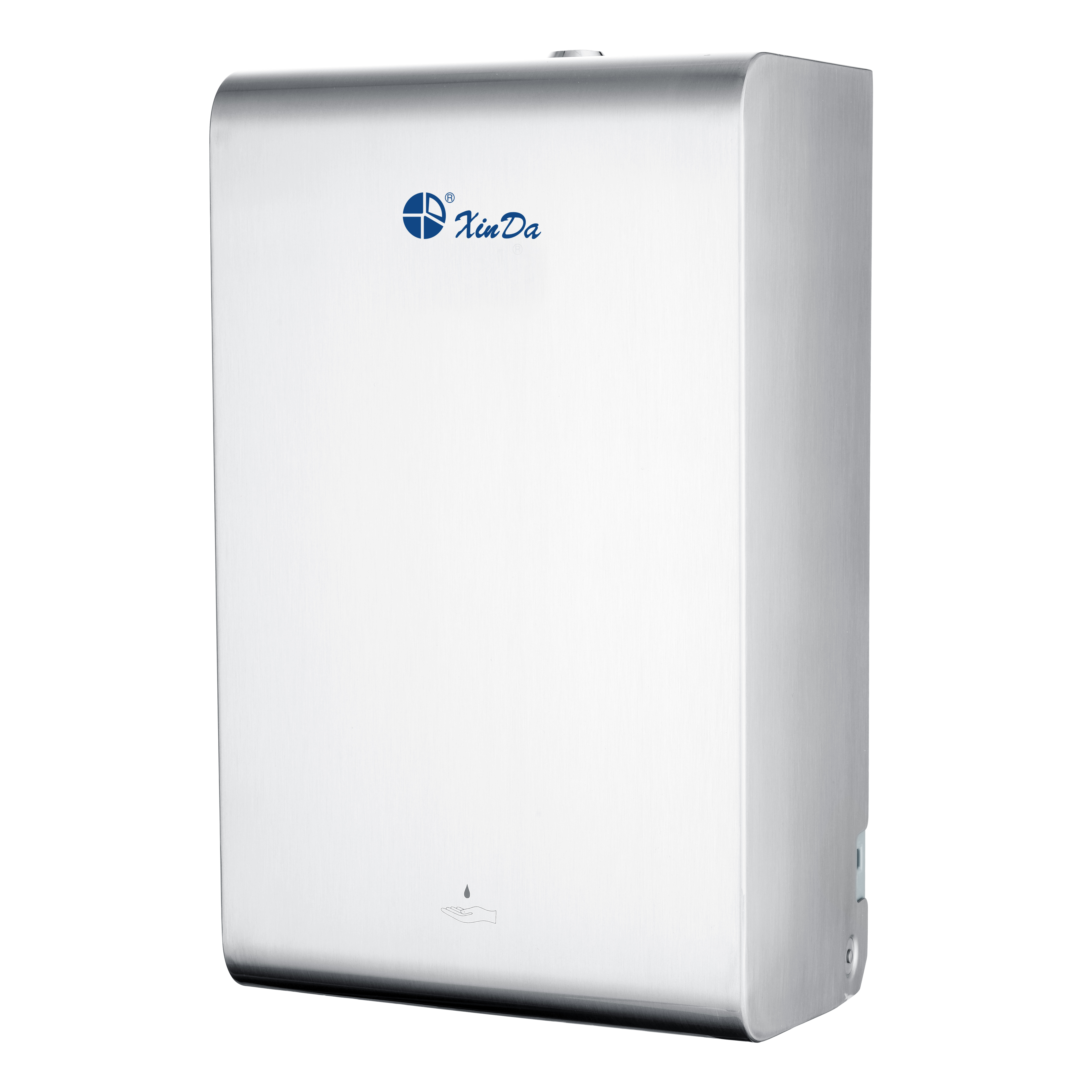
Not all stainless steel dispensers are built to the same standard. When evaluating products, these are the specifications that distinguish a commercial-grade unit from a consumer-grade one.
A quality auto soap dispenser activates within milliseconds of detecting a hand. Look for infrared sensor technology with a consistent detection range. Units with adjustable sensitivity settings offer more flexibility across different installation heights and user demographics.
Portion control is a practical cost-saving feature. The ZYQ210K, for example, dispenses 1mL per activation, with a maximum of 10 doses per single operation and a 3-second lockout between doses. Over a high-traffic day, these controls prevent significant soap waste and extend refill intervals.
For commercial settings, larger capacity reduces the frequency of refills and the associated labor cost. A 2,000mL reservoir is appropriate for hotel lobbies, airports, and office buildings. Smaller 500–800mL units suit individual office bathrooms or residential installations.
In shared or public spaces, a locking system protects the soap supply from tampering and deters theft—particularly important in schools, gyms, and public restrooms. The ZYQ210K includes a key-operated locking system for this purpose.
Battery-powered dispensers offer installation flexibility since they don't require proximity to an electrical outlet. AC-powered options eliminate battery replacement costs in high-use environments. Dual-mode dispensers that support both (such as the ZYQ210K, which accepts AC220V or 4x1.5V batteries) offer the broadest compatibility.
The core difference lies in how the soap is delivered. A standard liquid auto soap dispenser releases a measured amount of liquid soap, which the user then lathers manually. An auto foam soap dispenser mixes the liquid soap with air inside the pump mechanism before dispensing it, delivering pre-lathered foam directly to the hands.
The practical implications of this distinction are meaningful:
Foam uses less soap per wash. Because the pump aerates the soap, a smaller volume of liquid produces an equivalent lather. This reduces soap consumption and extends the time between refills.
Foam rinses faster. Pre-lathered foam clears from the hands more quickly under water, which matters in high-traffic restrooms where turnover speed is a factor.
Foam reduces drips. Foam is more cohesive than liquid, meaning less soap ends up on countertops and floors. The ZYQ210K specifically incorporates a non-drip pump mechanism to reinforce this.
For most commercial settings, the auto foam format offers a better balance of hygiene, efficiency, and cleanliness than standard liquid dispensers.
A restroom's fixtures communicate something about the standard of care that went into a space. A cracked plastic dispenser mounted with a strip of tape tells one story. A brushed stainless steel auto foam soap dispenser, flush to the wall and functioning reliably, tells another.
The decision isn't just aesthetic. The right wall mounted soap dispenser—particularly a touchless, stainless steel model—reduces cross-contamination, cuts soap waste, lowers long-term maintenance costs, and creates a better experience for every person who uses the space.
For commercial buyers, facilities managers, or designers specifying restroom accessories, stainless steel auto and foam soap dispensers represent the intersection of function and form. Start with a clear picture of your traffic volume and hygiene requirements, match those to the capacity and power options available, and choose a unit built from grade 304 stainless steel for the durability that commercial environments demand.
A wall mounted soap dispenser attaches directly to the wall, freeing up counter space and reducing the risk of spills or theft. Countertop dispensers sit on a surface and are more common in residential settings. For commercial restrooms, wall mounted units are preferred for their cleanliness, security, and ease of maintenance.
An auto soap dispenser uses an infrared sensor to detect hands and dispense soap without requiring the user to touch any surface. This eliminates the pump or lever as a contact point, which is one of the most common sources of cross-contamination in shared restrooms.
Grade 304 stainless steel is the standard for commercial restroom fixtures. It contains at least 18% chromium and 8% nickel, which gives it strong resistance to corrosion, moisture, and cleaning chemicals. The ZYQ210K Auto Foam Soap Dispenser, for example, uses 0.8mm 304 stainless steel housing.
Refill frequency depends on usage volume and dose size. A dispenser like the ZYQ210K dispenses 1mL per activation. In a restroom handling 500 users per day, a 2,000mL reservoir would last approximately four days before needing a refill—longer if foam dispensing is used, since foam requires less liquid per wash.
Most auto foam soap dispensers require a foaming soap concentrate, not standard liquid soap. Using regular liquid soap in a foam dispenser can clog the aerating pump mechanism. Always check manufacturer specifications before filling the reservoir.
AC-powered dispensers are generally more reliable in fixed, high-traffic commercial installations since they eliminate the need for battery replacement. Battery-powered units offer more installation flexibility where wall outlets are not available. Dispensers that support both power modes, like the ZYQ210K, provide the most versatile option for commercial buyers.

